

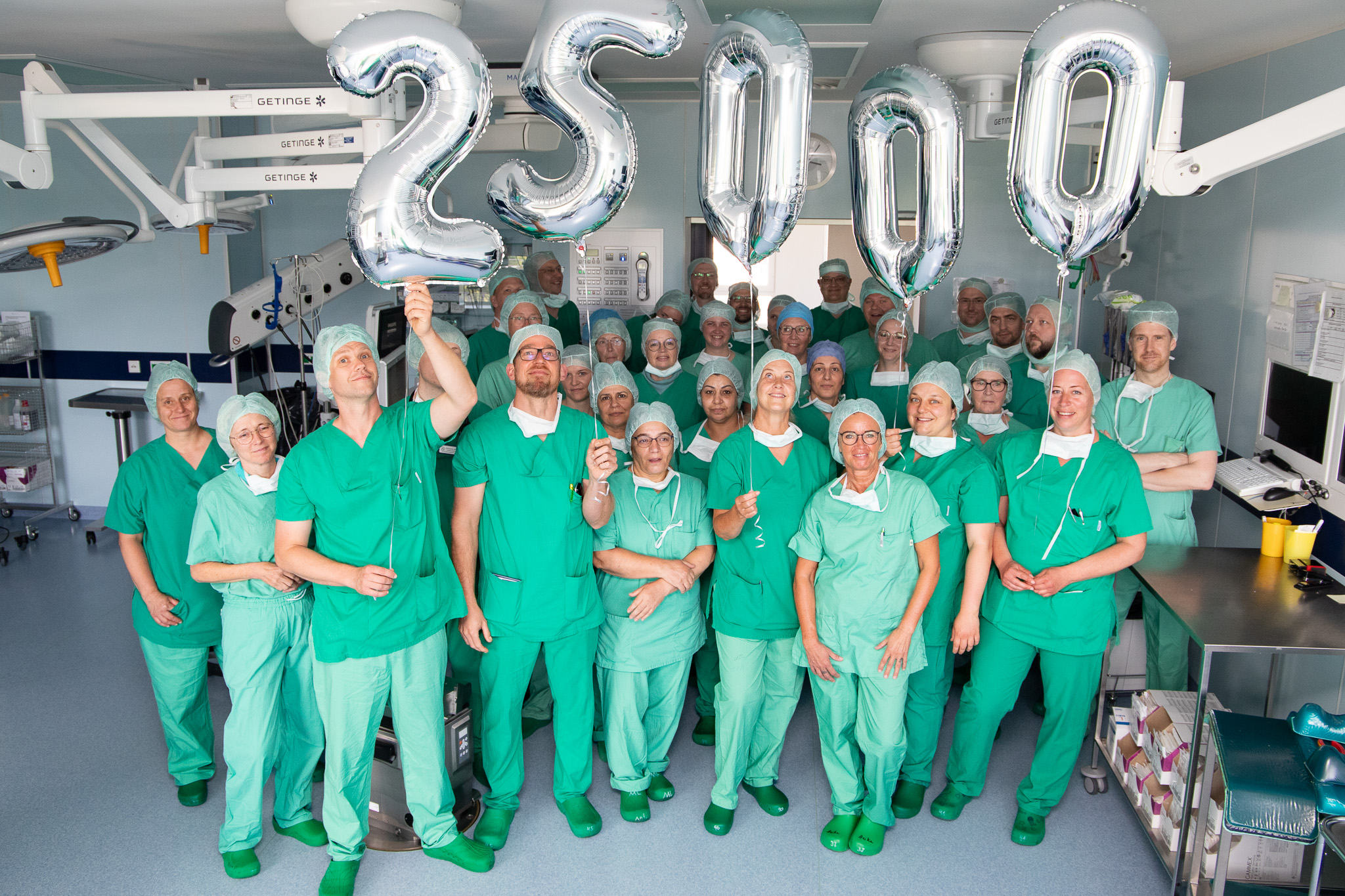
Gronau, 1 July 2026. The Department of Urology, Urologic Oncology and Robot-Assisted Surgery at St. Antonius Hospital Gronau has reached another major milestone. By performing its 25,000th robot-assisted radical prostatectomy (RARP), the centre has established itself as one of the world's most experienced institutions for the surgical treatment of prostate cancer using the da Vinci robotic system.
The first robot-assisted prostate removal at Gronau was performed in February 2006. Since then, robot-assisted surgery has become the international standard for the treatment of localized prostate cancer. The Gronau team has played a significant role in shaping this development from the very beginning. Since October 2025, the hospital has been the first centre in Europe to operate with the latest generation of the system, the da Vinci 5.
"Twenty-five thousand successful procedures represent far more than an impressive number. Behind every single operation is a patient who placed their trust in us," says Dr Christian Wagner, Head of Robot-Assisted Urology. "Our extensive experience enables us to continuously refine our surgical techniques and provide treatment at the highest medical standard. This achievement reflects an extraordinary team effort built over many years."
The significance of this milestone becomes clear when compared with other centres. While German hospitals perform an average of only 30 to 50 radical prostatectomies per year, and certification as a prostate cancer centre requires at least 50 procedures annually, the Prostate Centre Gronau currently performs around 1,800 prostate surgeries every year. Only a handful of centres in Germany exceed 500 procedures annually.
High surgical volumes are widely recognised as an important indicator of quality in prostate cancer surgery. International studies have demonstrated that experienced centres achieve lower complication rates, better oncological outcomes and improved functional results, particularly regarding urinary continence and the preservation of erectile function.
Robotic surgery provides surgeons with a highly magnified three-dimensional view and exceptionally precise instrument movements. For patients, this often means less blood loss, reduced postoperative pain, shorter hospital stays and a faster return to normal daily life. In prostate cancer surgery, precision is essential to completely remove the tumour while preserving the delicate nerves and muscles responsible for continence and sexual function.
The Prostate Centre Gronau has also established treatment standards that extend beyond the surgical procedure itself. These include intraoperative frozen-section analysis to immediately verify tumour-free surgical margins and the routine use of a suprapubic catheter, which may support healing and facilitate the early recovery of urinary continence. The centre is certified according to both DIN ISO and OnkoZert standards.
Today, five da Vinci robotic systems are in daily clinical use at St. Antonius Hospital. A sixth system is located at the European Robotic Institute (ERI), the hospital's dedicated robotic training centre. Patients now travel not only from across Germany but also from many European countries and overseas to benefit from the expertise available in Gronau.
"The milestone of 25,000 procedures reflects the tremendous experience we have built over the past two decades," says Dr Andreas Schütte, Head of the Department of Urology. "High surgical volumes form the basis for standardized processes, outstanding quality and continuous innovation. Ultimately, our patients benefit directly through excellent cancer control as well as improved functional outcomes such as continence and preservation of sexual function."
Patient satisfaction surveys also confirm the centre's high quality of care. According to regular evaluations, 98 percent of patients would recommend the Prostate Centre Gronau to others.
"At our hospital, robot-assisted surgery is the standard of care—not a luxury," adds Dr Christian Wagner. "Patients receive the benefits of robotic technology without any additional costs."
In addition to patient care, the Gronau team is deeply committed to research, education and the international exchange of knowledge. Physicians from around the world, as well as medical students, regularly visit the European Robotic Institute to observe advanced robotic procedures and receive hands-on training in modern robotic surgery.
